
How to Compare High RTP Slots in Canada

by admin

Choosing casino lussurio for slot research is less about chasing a single headline percentage and more about navigating a large catalogue intelligently. Canadian players may encounter thousands of titles, several software studios, jackpot categories and different game formats in one account. A practical approach is to narrow the library by return-to-player information, volatility, stake range and personal preferences before treating any title as a serious option. This makes browsing clearer and reduces the temptation to select games solely because they look familiar or carry a large jackpot label.
Start with the information that RTP actually tells you
Return to player, usually abbreviated RTP, is a long-run theoretical percentage. A slot listed at 96% RTP is designed to return approximately $96 for every $100 wagered over an extremely large number of spins, according to its mathematical model. It does not mean that a player receives $96 back from a particular session, nor does it predict the result of the next spin. Short-term outcomes can vary widely because random results may produce wins, losses or an unusually large payout.
When browsing high RTP slots Canada players should look for the game’s information panel, help menu or rules section rather than relying on a title, advert or search label. Check whether the displayed percentage is presented as a fixed RTP or as one of several selectable settings. Some games can be configured by the operator at different theoretical returns, so the same title may not have identical conditions everywhere. If the game does not clearly display its RTP, treat the missing figure as a reason to investigate further, not as evidence that the return is high.
RTP also needs context. A high theoretical return does not remove variance, guarantee profit or make a game suitable for every budget. It should be considered alongside the minimum and maximum stake, paytable, bonus mechanics and volatility description. A player who values frequent smaller wins may prefer a different design from someone comfortable with longer losing stretches for a chance at less frequent larger payouts. The percentage is useful as a comparison point, but it is not a promise.
Use catalogue filters before judging individual titles
A broad casino library becomes easier to manage when categories are used in a deliberate order. Begin with the general slot section, then narrow by subcategory if the interface provides options such as classic slots, video slots, jackpot games or provider collections. Provider browsing can also help when a player already understands a studio’s usual presentation or wants to compare several releases built around similar mechanics. These filters save time, but they do not establish that every title in a category has the same RTP.
After selecting a category, open the individual game details before making a shortlist. Record the information that matters: advertised RTP, volatility if disclosed, paylines or ways to win, maximum win language, bonus-round rules and stake boundaries. A simple shortlist of three to five games is more useful than opening dozens of thumbnails without checking their mathematics. Named titles in Canadian listings can include established releases and newer games, but familiarity with a title should never substitute for reading its current information screen.
Navigation can also reveal whether a game is being presented as a jackpot, crash, instant-win or standard slot product. Those formats may behave very differently, even when they appear beside one another in a general games lobby. Use search and filters to separate them, then compare like with like. If a filter produces a “high RTP” grouping, verify the actual figures inside each game because category labels can be broad, promotional or based on incomplete listing data.
Compare volatility instead of treating RTP as the whole decision
Volatility describes how a game tends to distribute outcomes, although providers may use terms such as low, medium or high variance rather than publishing a detailed statistical profile. Lower-volatility games are commonly associated with more frequent but potentially smaller returns, while higher-volatility games may produce longer quiet periods and less frequent, larger wins. These are general characteristics, not guarantees about a particular session or a fixed sequence of results.
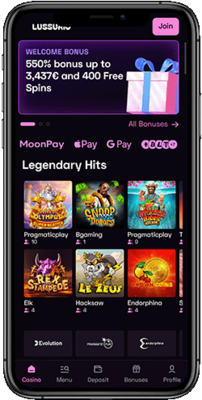
For a useful comparison, place RTP and volatility beside the practical stake range. A high-RTP game with a minimum stake that is too large for the intended budget may be a poor fit. Similarly, a low-stake title with extreme variance may create a very different experience from a moderate-volatility game with the same theoretical return. Check the currency selected in the account and the displayed wager controls, since a Canadian-dollar balance may show different cash amounts from examples presented in another currency.
Pay attention to features that can make volatility feel stronger: expanding symbols, free-spin rounds, multipliers, bonus-buy options, progressive jackpots and large advertised maximum wins. These mechanics can be entertaining, but they may also concentrate a game’s theoretical return in less frequent events. A short trial cannot prove a game’s RTP or volatility. Use a limited, predetermined entertainment budget and judge the title by its published information, not by whether a brief run happened to produce a win.
Check local conditions before relying on a game listing
Canadian players should distinguish a Canada-focused listing from a statement that every person in every province can use the same service. The source material identifies the operator as offshore and says it is not registered with iGaming Ontario. That distinction matters because provincial frameworks, consumer protections and permitted operators can differ. For general regulatory information, readers can consult the Alcohol and Gaming Commission of Ontario, while recognising that an official provincial resource does not confirm the status or availability of a particular offshore website.
Currency is another navigation detail. Canadian coverage identifies CAD among the supported account currencies, but the relevant figure is the one shown in the account and game interface after the currency has been selected. Do not assume that a stake displayed in dollars is Canadian dollars without checking the currency indicator. If a game, bonus or cashier condition is unclear, review the operator’s current terms before committing funds, because offers and thresholds can vary by currency, method and campaign.
Account checks may also affect the practical use of a slot catalogue. Registration information is expected to be accurate, and identity or payment-ownership documents may be requested, particularly before a withdrawal. Verification reviews can take longer when extra checks or provider investigations occur. This does not change a game’s RTP, but it can affect access to funds and should be considered before depositing. Treat the game lobby, account terms and verification requirements as connected parts of the user experience.
Build a repeatable shortlist for safer comparisons
A consistent process is more reliable than choosing whichever title appears first. Begin by deciding how much time and money the session can reasonably use. Then select a slot category, filter by provider or style, and open the information panel for each candidate. Write down the RTP and volatility details, the minimum stake, and any mechanics that may produce extended periods without a return. Remove games whose rules are unclear or whose minimum wager does not suit the planned budget.
Next, compare the remaining titles without allowing bonuses or jackpot imagery to dominate the decision. A promotion may have separate wagering rules, excluded games or a requirement to play through a deposit before withdrawal. Bonus-funded play can also contribute differently across categories, so check the applicable offer terms rather than assuming that every slot counts equally. If no promotion is being used, confirm whether any general deposit or withdrawal conditions still apply to the account.
Finally, review the account controls before playing. Available controls are described as including deposit, wagering, loss and time limits, reality checks, cooling-off periods and self-exclusion. These tools are most useful when set before a session becomes emotional. Keep a record of the games considered and the reasons for selecting one; this encourages decisions based on published information rather than recent results. No shortlist can turn gambling into income, and a high RTP remains a long-run statistic rather than a prediction.
Questions readers often ask about high RTP slots
Does a high RTP slot guarantee a better result?
No. RTP is a theoretical long-term measure, not a promise for one session or one player. Random results can create substantial short-term losses or wins. Compare RTP with volatility, stake size and game rules, and use only an entertainment budget that you can afford to lose.
Where should the RTP figure be checked?
Open the individual game’s help, rules or information panel and look for the stated return-to-player percentage. Do not rely only on a category label or third-party description. If several RTP settings appear, confirm which setting applies before comparing the game with another title.
Are all Canadian players shown the same slot conditions?
Not necessarily. Currency, jurisdiction, account status, promotions and operator terms can affect what is displayed or available. A Canada-focused listing is not proof of universal availability. Check the current game information, account currency and applicable requirements before depositing or relying on a particular offer.
Recommended Posts
When Casino Play Stops Feeling Manageable
November 03, 2026
When Casino Play Stops Feeling Manageable
November 03, 2026
When Casino Play Stops Feeling Manageable
November 03, 2026